Boarding Pass, Passport, Burner Number: The Travel Checklist Airlines and Hotels Hope You Skip
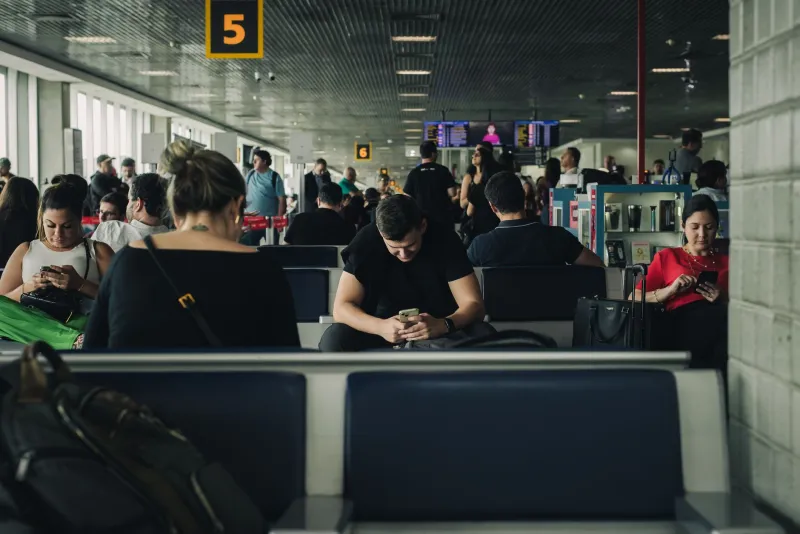
There's a moment every frequent flyer knows: you land, you connect to airport Wi-Fi, and a screen pops up asking for a phone number to receive a code. Except your SIM isn't working, your roaming plan didn't activate, and that code is going to a device 4,000 miles away from your brain.
Welcome to the airport test — the single fastest way to discover how fragile your real phone number actually is.
The Roaming Racket Nobody Warns You About
US carriers have gotten better about international plans, but "better" still often means $10 a day just to keep your number alive. And here's the kicker: half the time you're not using that number for calls. You're keeping it on life support purely so verification codes can find you.
Think about what that means. You're paying a daily toll to receive texts from your bank, your airline, and whatever booking app you used six months ago. Your phone number has become a leash, and every hotel check-in counter is holding the other end.
Frequent travelers to Europe, where eSIM data plans cost a fraction of US roaming, often discover the painful workaround: keep your primary SIM in, data roaming off, praying a text sneaks through. It's a hack held together with tape.
When Borders Become SIM-Swap Hotspots
Here's the part travel bloggers don't cover: crossing borders is prime territory for SIM-swap fraud.
If you swap in a local physical SIM at a kiosk in Bangkok or Bogotá, you may be deactivating your home SIM — depending on your carrier's dual-SIM behavior. Meanwhile, attackers who target travelers know that tourists are distracted, on unfamiliar networks, and often can't call their US bank easily when something goes sideways.
Your phone number, floating across foreign carrier infrastructure, is at its most exposed exactly when you can least afford a problem. A fraudster who intercepts your number doesn't just get your texts — they get your two-factor codes, your password resets, and potentially your banking session.
The Hotel Wi-Fi Verification Wall
Modern hotel networks have quietly become verification gauntlets. Sign in, get a code. Join the loyalty program, verify a number. Book the airport lounge, confirm via SMS.
Each one of those prompts is another place your real number gets logged — into systems you've never audited, in countries with data retention rules you've never read. Six hotels into a two-week trip, your digits have been passed around like a conference flyer.
The Temp Number Playbook for Travelers
The fix isn't going off-grid. It's segmentation — giving each verification point a number you don't care about.
- Booking and loyalty signups: Use a temporary number when creating accounts for hotels, rental cars, or deal-hunting apps. If they sell your data to marketers, they're marketing to a number that expires.
- Public Wi-Fi portals: That airport lounge code request? It doesn't need your real number. Ever.
- Local services: Food delivery abroad, transit apps, museum tickets — a temp number handles the one-time SMS without exposing your home digits to a foreign database.
- Your real number stays reserved for the handful of things that genuinely matter: your bank (ideally moved off SMS entirely — see our earlier coverage on why SMS 2FA is broken) and family.
Pre-Trip Number Hygiene: The Checklist
Run through this before your next flight:
- Audit your SMS 2FA. Switch critical accounts to authenticator apps or passkeys. SMS codes are the weakest link in your security chain.
- List every account tied to your number. If a service can reset your password via SMS, that's an attack vector while you travel.
- Set up a temp number for new signups you'll make on the road — travel deals, local apps, one-off bookings.
- Check your carrier's international behavior. Know whether a foreign SIM deactivates your home line, and plan accordingly.
- Never post your itinerary publicly with a contact number attached. Travel scammers harvest these.
- Enable eSIM on a secondary line if you must keep your US number, but treat it as a target, not a shield.
Travel Light — Digitally Speaking
You wouldn't carry your entire wallet through a foreign market and hand it to strangers who ask. But that's essentially what happens every time your real number goes into an unfamiliar verification form.
The travelers who've made the switch to temp numbers for anything non-essential describe the same feeling: lighter. Fewer spam texts when they land back home. No mystery charges. No panic when a kiosk SIM goes sideways.
Your passport should be the only ID you hand over at the border. Your phone number deserves the same caution.