Selling Your Couch Shouldn't Cost You Your Privacy: A Marketplace Safety Playbook
You listed a used patio set for $150 on Facebook Marketplace. Within an hour, you've got three interested buyers, and the first one texts: "Can you text me your number? Easier to coordinate."
And just like that, a stranger who knows nothing about you — except that you own a patio set — has your permanent, personal, tied-to-everything phone number.
Most of us hand it over without thinking. We shouldn't.
What a Stranger Actually Learns From Your Number
Your phone number isn't just a way to arrange a pickup time. It's a thread that, when pulled, unravels a surprising amount of your life.
Your identity. Run a number through a people-search site — the same ones data brokers use — and you can often surface a full name, approximate address history, relatives, and sometimes an employer. A buyer who seems slightly too curious about where exactly you live now has tools to confirm it.
Your SIM-swap exposure. If a scammer ever wants to take over your accounts, your phone number is step one. Every person who has it is a potential starting point for social engineering — a convincing text pretending to be your bank, your carrier, or you.
A permanent line to you. Deals end. Numbers don't. Buyers who feel stiffed — even over legitimate disputes — can text you for months. Harassment after marketplace transactions is common enough that it's practically a genre.
A pattern of your habits. Post the same number across Craigslist, OfferUp, and Marketplace over a few years, and a stranger can piece together where you live, what you own, and when you're typically home waiting for pickups.
None of this means marketplace selling is dangerous in itself. It means the default habit of sharing your real number adds risk the transaction doesn't require.
Enter the Disposable Number
A temporary phone number flips the script. You get a real, working number that receives texts and calls — enough to coordinate a pickup — but it isn't wired to your identity, your carrier account, or your two-factor authentication.
When the sale is done, you retire the number. The buyer who turned out to be a no-show, a lowballer with a grudge, or something worse has no path back to you.
Services like TempSMS Hub exist exactly for this: get a number, run the transaction, walk away clean.
The Seller's Playbook: Seven Steps From Listing to Handoff
Here's the routine experienced marketplace sellers quietly follow.
1. Set up your temp number before you post. Grab a disposable number first, then use it on your listing and in messages. If a platform requires phone verification to create an account, use the temp number there too — your personal number shouldn't be attached to a listing that's publicly visible.
2. Keep conversations on-platform as long as possible. Marketplace messaging gives you a paper trail and some scam protection. Move to texting only when it's genuinely convenient — say, coordinating a same-day pickup.
3. Never put your address in writing. Share a cross-street or neighborhood for context, then give the exact address by text — from your temp number — only when the buyer is en route. If a buyer pushes hard for your address hours in advance, that's a flag, not eagerness.
4. Pick public meetups for small items. Many police stations across the US offer designated "safe exchange" spots in their parking lots — monitored, well-lit, and a strong deterrent to bad actors. For anything under a few hundred dollars, this beats your driveway.
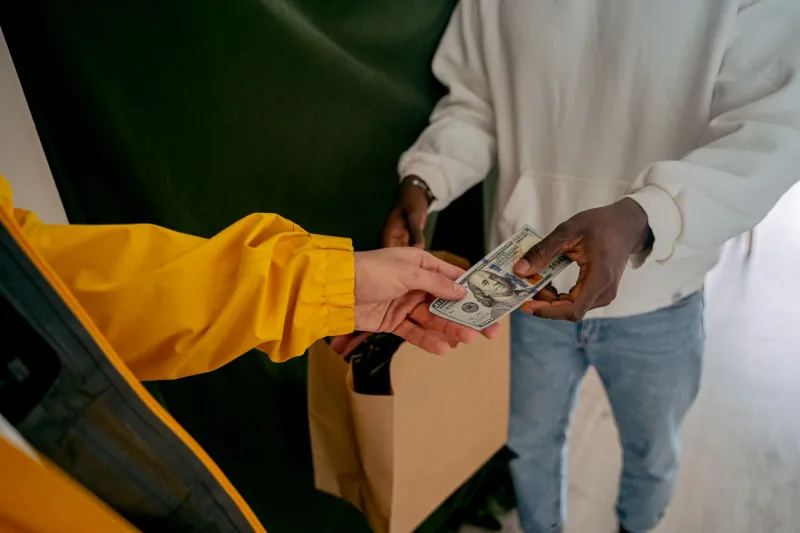
5. Bring a buddy for big-ticket items. Selling a car, a TV, or a laptop? Have someone else home or with you. Cash only for in-person deals; if a buyer suggests Venmo, Zelle, or a check for an in-person pickup, be skeptical — fake payment screenshots and fraudulent checks are the oldest tricks in the book.
6. Watch for the classic scams. The "I'll send a courier with extra money" script, the overpayment refund scam, and the verification-code request ("just confirm you're real by reading me this code") are all still running. That last one is a straight-up account takeover attempt — never read a verification code to anyone.
7. Burn the number when the deal closes. Sold the item? Retire the temp number. No lingering texts, no follow-up spam, no path from a disgruntled buyer back to your life.
"Isn't That Kind of Paranoid?"
We hear this a lot, and the honest answer is: it's just hygiene.
You already separate things that don't need to be connected — you don't give your SSN to a gym, you don't use your work email for personal signups. A phone number is no different. Coordination is a one-time job; your real number is a long-term asset.
The math is simple. A temp number costs a couple of minutes and pocket change. A leaked number can cost you months of spam, a compromised account, or worse. That trade isn't close.
The Bottom Line
Marketplace selling is one of the genuinely great things about the internet — turning stuff you don't need into cash, neighbor to neighbor. There's no reason the convenience should come bundled with giving strangers a permanent key to your personal life.
Set up a disposable number, run the deal, cancel the number. Your buyer gets a smooth transaction. You get your privacy back the moment the trunk closes.
That's not paranoia. That's just selling smart.