Swipe Right on Privacy: What Dating Apps Won't Tell You About Your Phone Number
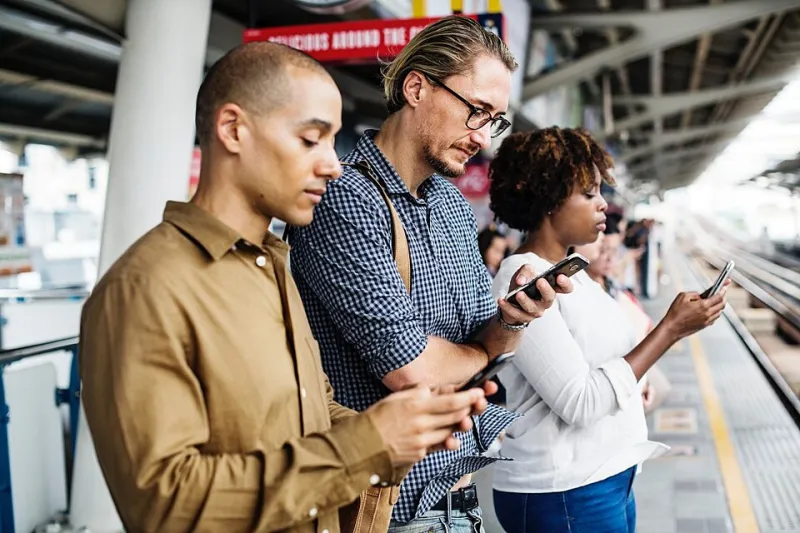
Photo: Rawpixel.com, CC0, via Wikimedia Commons
Online dating has become as American as a Sunday brunch — roughly 30% of U.S. adults say they've used a dating app or site at some point. It's normalized, it's convenient, and for a lot of people, it works. But buried inside that convenience is a privacy risk that doesn't get nearly enough airtime: what happens to your phone number once you hand it over?
Spoiler: it rarely just sits there quietly.
The Moment You Share Your Number, the Clock Starts
Most dating apps ask for a phone number during signup for "verification purposes." That framing sounds benign — like they're just making sure you're a real person. And sure, that's part of it. But your number doesn't stop working once you've cleared the verification step. It gets stored, often indefinitely, and becomes a data point tied to your profile, your activity, and in many cases, your location.
Here's where it gets uncomfortable. Dating apps have had some truly spectacular data breaches. In 2021, a leak exposed data from multiple dating platforms affecting hundreds of millions of users — including phone numbers, location data, and personal messages. When that kind of breach hits, your number doesn't just float in a vacuum. It gets cross-referenced with other leaked datasets, and suddenly someone with bad intentions can piece together a surprisingly complete picture of who you are and where you live.
That's not a hypothetical. It's a documented pattern.
Stalking Is More Common Than You'd Think
Let's talk about the scenario nobody wants to think about when they're optimistically setting up a profile at 11pm on a Tuesday: stalking.
According to the Cyber Civil Rights Initiative and various domestic violence advocacy groups, a significant portion of stalking cases in the U.S. now have a digital component. Dating apps, by their very nature, involve sharing personal details with strangers — sometimes dozens of them in a short period. Most of those interactions are totally fine. But it only takes one person with obsessive tendencies to turn a casual conversation into a serious safety problem.
Once someone has your real phone number, the options for harassment multiply fast. They can find your carrier, attempt SIM-swap attacks, look up your number in reverse-lookup directories, or just flat-out bombard you with texts and calls. Blocking helps, but it doesn't undo the fact that they have the number. Changing your number is a massive hassle that disrupts everything from your bank notifications to your family group chat.
A temporary number sidesteps all of this cleanly. If a match turns weird, you don't block — you just let the number expire. Problem dissolved.
The Marketing Machine You Didn't Sign Up For
Even in the much more boring scenario where nothing dramatic happens, your phone number still has a busy life ahead of it. Dating apps are businesses, and businesses monetize data. Many sell or share user information with third-party advertisers, data brokers, and analytics firms. Your number becomes part of a profile that follows you around the web, influencing the ads you see and the prices you're quoted.
Ever notice how after signing up for a new app, you suddenly start getting texts from services you've never heard of? That's not a coincidence. Phone numbers are a key matching variable in advertising ecosystems — they help companies connect your behavior across platforms and devices. Your dating app profile might technically be private, but your phone number is doing networking on your behalf whether you like it or not.
Real Talk: How Temp Numbers Actually Help Here
Using a temporary number for dating app verification isn't about being shady or hiding who you are. It's about keeping the initial, uncertain phase of meeting strangers separate from the parts of your life that are stable and important.
Think about it structurally. When you meet someone at a bar, you don't hand them your Social Security number along with your name. You share what's appropriate for the level of trust that exists at that moment. A temp number is the digital equivalent of that instinct — you're reachable, you're responsive, but you haven't handed over the keys to your entire digital identity.
Here's a practical framework that actually works:
Phase 1 — App Verification: Use a temporary number to verify your account. This keeps your real number out of the app's database entirely.
Phase 2 — Early Conversations: Keep things in-app as long as possible. Most modern dating platforms have decent messaging built in. There's no rush to move to SMS.
Phase 3 — Moving Off-App: If you want to text outside the app but aren't ready to share your real number, use a secondary temp number specifically for this person. Services like TempSMS Hub make this genuinely easy.
Phase 4 — Real Trust, Real Number: Once you've met in person a couple of times and feel confident about this person, share your actual number if you want to. By then, you have real-world context for who they are.
The Bigger Picture
Dating apps aren't uniquely villainous here — this is a broader problem with how phone numbers have become identity anchors in the digital world. But dating platforms are a particularly high-risk environment because they involve intentional interaction with strangers, emotional investment that can cloud judgment, and data that's inherently personal and sensitive.
Safety experts who work with domestic violence survivors increasingly recommend that people maintain separate contact channels when meeting new people online. The advice isn't paranoid — it's practical. You don't know who someone is until you know who someone is.
Using a temporary number for the early stages of online dating isn't a red flag or a sign of bad intentions. It's just smart. It protects your data from breaches, limits your exposure to marketing surveillance, and gives you a clean exit if something goes sideways — all without making it harder to actually connect with someone genuine.
The goal is real connection. A temp number just makes sure the path to getting there doesn't come with a side of privacy nightmares.